Warehouse Technology Logistics Sales: Must Have Tools To Manage, Track, and Grow Sales
Logistics sales tools such as CRM and marketing automation help companies organize leads, improve follow-up, track opportunities, and support revenue growth.
Table of Contents
SHARE ON SOCIAL MEDIA


For many small and mid-size logistics companies, logistics sales tools can help turn relationship-driven selling into a more organized and scalable process. Sales, operations, and marketing remain both a challenge and an opportunity, especially when customer relationships are still managed through emails, notes, and memory alone.
Soon enough, companies relying solely on this approach hit a growth barrier. Their annual growth rate begins to stall compared to organizations with strong logistics sales and marketing strategies.
Today’s opportunity lies in the ability to implement historically proven approaches alongside more modern strategies and interconnect marketing and sales efforts to increase sales and revenues.
Technologies such as Marketing Automation Systems and the latest advances in Customer Relationship Management Systems can kick business growth into high gear.
Which Logistics Sales Tools Help Manage, Track, and Grow Sales?
Two of the most useful logistics sales tools are marketing automation and customer relationship management systems. Together, they help teams organize leads, maintain consistent follow-up, track opportunities, and support more structured sales growth.
1. Marketing Automation Systems
Marketing Automation is one of the most unexploited opportunities among supply chain and logistics companies. As of the writing of this article, not many companies in this space are leveraging digital marketing and/or marketing automation to nurture leads and convert them into customers.
What are marketing automation systems?
Marketing automation systems are software platforms that automate repetitive marketing tasks such as email follow-ups, social media engagement, and website interactions.
It also allows companies to centralize many of their online marketing channels (social, SEO, emails, etc.) and collect statistical performance data to understand what is working, what is not, and what needs to be adjusted.
Long story short, marketing automation is a platform that will help improve and track marketing efforts and provide increased return on investment (ROI).
How can I benefit from marketing automation?
80% of sales take at least five follow-ups, but 44% of sales professionals give up after the first follow-up. This is where marketing automation can make a huge difference.
Instead of remembering to follow up, sales reps need only enroll the contact in a nurturing sequence, which triggers follow-up emails according to a defined schedule.
Another useful feature of marketing automation is lead scoring. Lead scoring tracks different interactions between lead, prospects, and/or customers with your marketing and sales efforts. This allows you to understand whether or not the contact is ready to buy before reaching out to them.
For example, if a customer visits a specified product/service page on your company website, the system will assign a value of 10, while a visit to the careers page will assign a value of -2. A total lead score of 8. Leads with high score values will signal that a contact is considering or interested in buying.
Another great benefit of marketing automation is that it allows you to automate processes involved in after-sale service.
What are some of the best-known marketing automation systems?
There has been an explosion of marketing automation systems, but when selecting one for your business, it’s important to consider its functionalities, the ability to integrate with your other systems, reliability, and costs. Do not jump into any system without properly investigating these features.
Among the best-known marketing automation systems are ActiveCampaign, SharpSpring, Marketing360, Infusionsoft, HubSpot, and Marketo.
2. Customer Relationship Management
Relationships are king in the small & mid-size logistics and supply chain space, but many businesses are still not managing these relationships properly.
Many companies manage customer relationships using emails, notes, and brainpower. The problem with this is that as the company grows, it becomes unsustainable, leading to a lack of personal touch that once was the strength of the business. In essence, it’s a completely counterintuitive way of managing relationships.
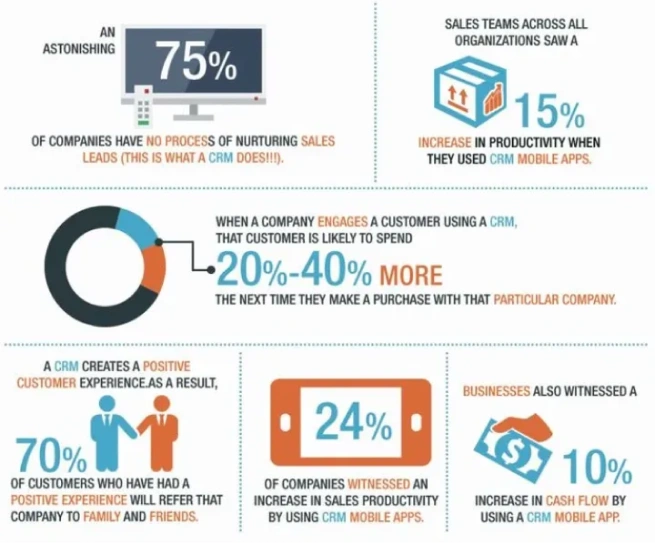
CRM systems allow companies to track every customer interaction and help them maintain that personal touch regardless of their business size. They also help companies define their sales process, track sales opportunities, and understand their lead-to-customer conversion rates—a key indicator for forecasting sales.
What are customer relationship management systems?
CRMs are systems that allow companies to manage their interactions with leads, prospects, and/or customers. They also provide a centralized platform to keep track of the sales process and opportunities and track sales performance metrics.
How can a CRM system help?
Some of the most important benefits of using a CRM come from personalizing customer relations and tracking customer interactions and sales opportunities. When customer interactions are tracked in a central system, anyone within the company can help the customer at any given time without losing track of the customer’s specific needs and desires.
Another advantage of using a CRM system is the ability to define and enforce a sales process, which increases sales predictability. With a well-implemented system, companies can track each stage and understand the conversion rate at each stage. Understanding the patterns and behaviors that lead to successful sales is the cornerstone of effective logistics sales operations.
For a broader look at how to strengthen these efforts, explore these logistics sales strategies to boost revenue growth.
What are some of the best-known CRM systems?
This technology has exploded in terms of vendors and features and continues to evolve rapidly. When selecting a CRM system, consider the recommendations for selecting a Marketing Automation System (features, integration capabilities, costs, and reliability). Remember, plan carefully and select wisely. Don’t jump right away into a system without proper analysis.
Among the best-known CRM systems are Salesforce, Microsoft Dynamics, SugarCRM, and Hubspot. These are some of the best solutions, but a Google search will provide more vendor options. Just remember, choose wisely! Once in a system, moving somewhere else is hard and painful.
How Supply Chain CRM Supports Logistics Sales Teams
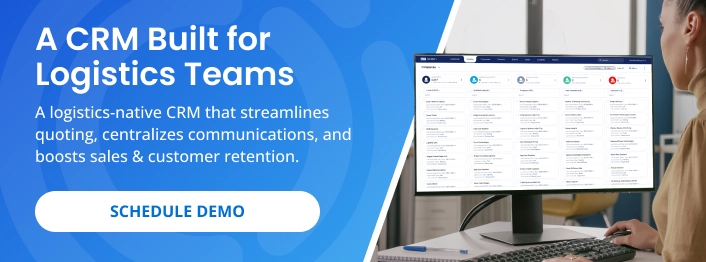
General CRM platforms can help organize contacts and opportunities, but logistics sales teams often need tools that reflect how their businesses actually operate. Supply Chain CRM is built for 3PLs, freight brokers, freight forwarders, NVOCCs, and warehouses, helping teams manage leads, customers, quotes, tasks, and sales activity from one connected platform.
With Supply Chain CRM, logistics sales teams can:
- Centralize lead, prospect, and customer information.
- Track opportunities through a customizable sales pipeline.
- Manage deals, tasks, meetings, and structured sales cycles.
- Organize email and call activity by company and contact.
- Review logistics-specific sales reports and performance trends.
- Create quotes using historical data, market rates, mileage information, and logistics integrations.
By combining standard CRM capabilities with logistics-specific sales and quoting tools, Supply Chain CRM can help teams maintain consistent follow-up, improve visibility into their pipeline, and preserve important customer knowledge as the business grows.
Conclusion
Logistics companies do not have to choose between relationship-driven selling and a more structured sales process. Marketing automation can help nurture leads and maintain consistent communication, while a logistics CRM can centralize customer history, sales activity, tasks, and opportunities. Together, these logistics sales tools give teams a more organized way to follow up, understand what drives conversions, and support sustainable growth.
Ready to see how a logistics-focused CRM can support your sales process? Schedule a demo to explore how Supply Chain CRM can help your team manage leads, centralize communications, track opportunities, and quote with greater visibility.
For more insights on logistics sales tools, CRM, and technology that helps logistics companies manage and grow sales, follow us on LinkedIn and subscribe to our YouTube channel.
Frequently Asked Questions About Logistics Sales Tools
1. What are logistics sales tools?
Logistics sales tools are software applications that help logistics companies manage leads, customer relationships, follow-ups, quotes, sales activity, and performance. Common examples include customer relationship management systems, marketing automation platforms, quoting tools, and sales analytics software.
2. How does a CRM help logistics sales teams?
A CRM helps logistics sales teams centralize customer information, track opportunities, schedule follow-ups, manage tasks, and review communications. This gives sales representatives and managers a clearer view of each relationship and reduces the risk of leads or customer requests being overlooked.
3. What is the difference between CRM and marketing automation?
A CRM primarily manages leads, customers, sales opportunities, and relationship history. Marketing automation manages repetitive marketing activities such as email nurturing, campaign follow-ups, lead scoring, and audience engagement. The two systems can work together to move prospects from initial interest through the sales process.
4. What should a logistics company look for in a CRM?
A logistics company should look for lead and customer management, pipeline visibility, task tracking, centralized communications, quoting capabilities, reporting, integrations, and industry-specific data fields. The system should also fit the company’s sales process and be able to scale as its customer base grows.
5. What makes Supply Chain CRM different from a general CRM?
Supply Chain CRM is designed specifically for 3PLs, freight brokers, freight forwarders, NVOCCs, and warehouses. In addition to standard CRM functions, it provides logistics-focused quoting, historical lane information, sales analytics, communication tracking, and integrations that support logistics sales and pricing workflows.

Written by
Hector Sunol
Related Blogs

Supply Chain Orchestration: A Simple SMB Guide
Running a small or midsize operation today is tough. Orders spike, then stall. Inventory moves fast. Customers want answers right now.
Most teams try to keep up with spreadsheets, emails, and a few discon...
Start Reading

How Supply Chain Software is Transforming Small Business Operations
In today’s competitive market, small businesses need every advantage to stay ahead, especially in logistics where efficiency is key. Historically, advanced tools like supply chain management software were only accessi...
Start Reading

Warehouse Customer Portal: Definition and Benefits
Tired of endless phone calls and emails just to get basic updates on your inventory or shipments? A warehouse customer portal puts all that information at your fingertips, 24/7.
Start Reading