
Data & Analytics Freight Forwarder Performance Metrics for Smarter Daily Operations
Freight forwarder performance metrics give a clearer view of workload, capacity, and daily operations. With the right metrics, freight forwarders can spot issues earlier, plan better, and make decisions with less guesswork.
Table of Contents
SHARE ON SOCIAL MEDIA


Freight forwarder performance metrics are measurements that help teams track cargo movement, package status, warehouse workload, capacity use, and transportation activity. These metrics give freight forwarders a clearer view of what is moving, what is pending, and where pressure is building inside the operation.
This matters because freight forwarding has many moving parts. A team may handle warehouse receiving, cargo storage, consolidation, documentation, customer updates, and different types of freight on the same day.
Without clear metrics and the right freight forwarding software, it becomes harder to see what is actually happening across daily operations. Your team may need to check emails, spreadsheets, warehouse notes, shipment records, or separate systems just to answer basic questions such as:
- What cargo is still on hand?
- Which packages are ready for the next step?
- How much space is being used?
- Which transportation modes drive the most work?
Tracking the right performance metrics helps answer these questions faster. It also helps you plan labor, manage capacity, improve communication, and make better daily decisions.
Below are the key metrics freight forwarders should track to better understand cargo flow, workload, and operational performance.
Why Freight Forwarder Performance Metrics Matter
Freight forwarding moves fast, and small gaps in visibility can create bigger operational issues later. Cargo may be received but not processed. Packages may sit on hand longer than expected. A sudden increase in LCL shipments may add pressure to consolidation work. Heavy or bulky cargo may also take more space, time, and equipment than planned.
Because of this, freight forwarders need clear performance metrics to understand what is happening across daily operations. These metrics help your team see where cargo stands, where work is building up, and what needs attention next.
Instead of relying on scattered updates, managers can review actual data and make better decisions about labor, warehouse space, customer updates, and transportation activity.
However, the value does not come from tracking every possible number. The value comes from tracking the right metrics and reviewing them in a useful way.
Key Freight Forwarder Performance Metrics to Track
1. Transportation Mode
Transportation mode measures how many shipments, packages, or consolidations move by service type. This may include air, ocean, FCL, LCL, FTL, LTL, or other transportation modes used by the business.
This metric matters because not all shipments create the same kind of work.
Air freight may require faster updates and tighter coordination. Ocean freight may involve more documentation, container planning, and longer timelines. LCL shipments may create more consolidation work.
When freight forwarders track transportation mode, they can see which services drive the most activity. This helps them understand where time, labor, and attention are going.
For example, if LCL volume is rising, the team may need to review consolidation workflows. If air freight activity increases, the team may need faster communication and more frequent status checks. Meanwhile, ocean-heavy workloads may require closer attention to documentation and container planning.
Transportation mode also supports better customer reporting. If a customer often ships through a specific mode, the team can review activity patterns and prepare better updates.
This metric is simple, but it gives leaders a strong starting point for capacity planning.
2. Package Status
Package status measures where cargo is in the process. Common statuses may include received, on hand, processed, staged, ready to move, released, or shipped.
This is one of the most practical freight forwarder performance metrics because it shows what is happening inside the operation right now.
A shipment may be entered into the system, but that does not always mean the cargo is ready for the next step. It may still need inspection, labeling, documentation, consolidation, staging, or release. Package status helps the team see that difference.
When your team tracks package status clearly, they can spot pending work faster. They can also see where cargo is building up.
If many packages are stuck in “received,” the receiving or processing area may need attention. If too many packages remain “on hand,” there may be a delay in customer instructions, documentation, or outbound planning. If packages are ready to move but not released, the issue may be tied to carrier pickup, scheduling, or final checks.
This metric also helps reduce confusion across teams. Warehouse staff, operations teams, and customer service teams can work from the same status view. As a result, they do not need to rely only on manual updates or back-and-forth messages.
Package status is also useful for customer communication. When a customer asks where their cargo is, the team can respond with more confidence if the status data is clear and current.
3. Package Volume
Package volume measures how much space cargo uses. This may be tracked by cubic feet, cubic meters, dimensions, shipment, customer, warehouse area, or time period.
For freight forwarders, package volume is important because space can become a major operational constraint. A warehouse may have enough package count capacity but still run into space issues if the cargo is large, bulky, or irregular in shape.
That is why shipment count alone does not tell the full story.
For example, 100 small cartons may take far less space than 20 oversized crates. If the team only tracks the number of packages, the workload may look manageable. However, the actual storage and handling needs may be much higher.
Package volume helps freight forwarders understand how much warehouse space cargo is using. It also helps with storage planning, staging, consolidation, and outbound preparation.
This metric becomes even more useful when volume changes over time. If package volume increases during certain seasons, managers can plan space and labor earlier. For customers that often send high-volume cargo, the team can review storage needs and service requirements. When volume rises while shipment count stays flat, the team may need to adjust how it measures workload.
Volume also supports better consolidation planning. Freight forwarders need to know how much space cargo will take when combining shipments or preparing loads. Clear volume data helps them plan more accurately.
In short, package volume helps freight forwarders see capacity in a more realistic way.
4. Package Weight
Package weight measures the total weight of cargo handled, stored, consolidated, or prepared for transport.
Like volume, weight gives freight forwarders a deeper view of workload. Some cargo may not take much space but may be heavy and harder to handle. Other cargo may be light but bulky. Both can affect operations in different ways.
Weight matters for handling, equipment use, labor planning, consolidation, and transportation decisions.
For example, heavy cargo may require forklifts, special handling, stronger pallets, or more careful load planning. It may also affect how shipments are consolidated or moved through the warehouse. If the team does not track weight clearly, they may underestimate the physical work needed to move cargo.
Package weight also helps with transportation planning. Freight forwarders often need weight data to support carrier selection, load planning, rating, and documentation.
This metric can also reveal workload trends. If total package weight increases over time, the operation may need to review equipment, staffing, and handling processes. For customers with consistently heavy cargo, the team may also need to account for extra handling needs in planning and service expectations.
Together, package weight and package volume give freight forwarders a better view of capacity and workload.
Other Freight Forwarder Metrics Worth Tracking
Transportation mode, package status, volume, and weight are strong starting points. However, freight forwarders can also track a few more metrics to get a clearer view of daily performance.
- Shipment Count: This tracks how many shipments move through the operation within a set period. It gives teams a quick view of workload, especially when reviewed with volume, weight, and transportation mode.
- On-Time Processing: This measures whether cargo moves through key steps, such as receiving, inspection, labeling, or release, within the expected time frame.
- Warehouse Dwell Time: This tracks how long cargo stays in the warehouse before moving to the next step. As dwell time increases, it may point to delays in documentation, customer instructions, consolidation, or outbound planning.
- Exceptions or Holds: This tracks cargo delayed by missing documents, damage, customs issues, customer instructions, payment holds, or special handling needs. By tracking these issues, you can see why cargo is not moving as planned.
For a deeper look at warehouse-focused measurements, this guide to warehouse KPIs covers key metrics across receiving, storage, fulfillment, distribution, and reverse logistics.
Benefits of Tracking Freight Forwarder Performance Metrics
Tracking freight forwarder performance metrics helps teams understand daily work more clearly and make faster, better decisions.
Better Operational Visibility
Clear metrics help freight forwarders see how daily operations are moving across shipments, workload, capacity, and transportation activity.
Instead of relying on scattered updates, freight forwarders can review key data in one place. This makes it easier to understand which areas are busy, where workload is building, and what may need closer attention.
Better operational visibility also supports smoother coordination across warehouse, logistics, customer service, and management teams. When everyone works from clearer information, your team can plan the next steps with less confusion.
Faster Issue Detection
Problems are easier to manage when they are spotted early. For example, a package status report may show that too many items are stuck in “received.” A dwell time report may show cargo sitting longer than expected. A transportation mode report may show a sudden increase in one service type.
These signals help your team act sooner. They can review the cause, assign work, update customers, or adjust plans before the issue grows.

Smarter Capacity Planning
Capacity is not only about space. It also includes labor, equipment, dock activity, storage areas, and time.
Metrics such as package volume, package weight, transportation mode, and shipment count help you understand capacity from different angles.
For example, high volume may create storage pressure. High weight may require more equipment or handling time. High LCL activity may add consolidation work. A rise in air freight may create faster turnaround needs.
When your team can see these patterns, they can plan with more confidence.
Better Customer Updates
Customers expect clear updates. However, your team can only give strong updates when they have clear information.
Performance metrics help teams respond with better details. They can see whether cargo has been received, processed, staged, or released. They can also review where work may be pending.
This does not mean every delay disappears. But it does mean the team has better information to explain what is happening and what comes next.
Stronger Operational Reporting
Daily reporting shows what needs attention now, while trend reporting reveals patterns that can guide long-term improvements.
By tracking performance metrics consistently, freight forwarders can review patterns. They can see which modes are growing, which statuses create the most backlog, which customers use the most space, and which areas need process improvement.
This kind of reporting supports better planning and better conversations across the business.
How Supply Chain Orchestrator Helps Freight Forwarders Track Performance
Freight forwarders do not just need more data. They need connected visibility across cargo movement, warehouse activity, customer updates, and operational performance.
That is where supply chain orchestration can help.
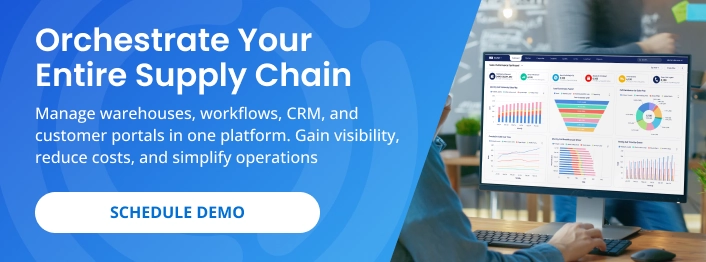
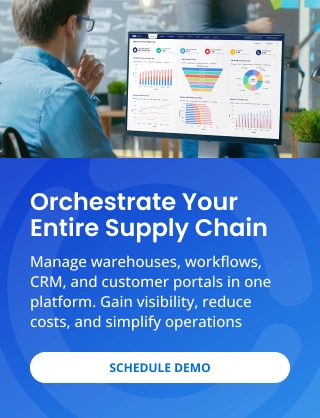
With Supply Chain Orchestrator, freight forwarders can create custom reports and dashboards around the performance metrics that matter most. Instead of checking disconnected data across different tools, your team can view key operational information in one connected platform.
This helps with monitoring package status, volume, weight, transportation activity, and workload from a clearer view. It also supports better coordination across the warehouse, logistics, customer service, and management teams.
For example, a freight forwarder can use dashboards to track how many packages are received, on hand, processed, or ready for the next step. They can also review cargo volume, total package weight, and activity by transportation mode.
As a result, less time goes into searching for updates, and more time goes into acting on work that needs attention.
Supply Chain Orchestrator brings essential logistics and warehouse tools into one platform, including WMS, Workflows, CRM, Customer Portal, Dimensioning, and Mobile App. For freight forwarders, this means the same system can support warehouse activity, cargo handling, customer visibility, reporting, and daily execution. Instead of jumping between disconnected tools, your team gets a stronger foundation for tracking performance and managing work in one place.
Conclusion
Freight forwarder performance metrics help you see how daily operations are moving across cargo, workload, capacity, and transportation activity. By tracking key metrics like transportation mode, package status, volume, and weight, you can spot issues sooner and make better decisions.
However, these metrics are most useful when they are easy to access and review. With Supply Chain Orchestrator, freight forwarders can track performance through connected tools for WMS, Workflows, CRM, Customer Portal, Dimensioning, and Mobile App—all in one platform.
To see how Supply Chain Orchestrator can help you manage work with clearer visibility, schedule a demo at supplychainorchestrator.com.
Frequently Asked Questions
1. What are freight forwarder performance metrics?
Freight forwarder performance metrics are measurements that help teams track cargo movement, shipment activity, package status, warehouse workload, capacity use, and operational performance.
2. Which performance metrics should freight forwarders track?
Freight forwarders should track metrics such as transportation mode, package status, package volume, package weight, shipment count, warehouse dwell time, on-time processing, and exceptions or holds.
3. Why is package status important for freight forwarders?
Package status helps you see where cargo is in the process. It can show whether packages are received, on hand, processed, staged, ready to move, or released. This makes it easier to spot pending work and manage daily activity.
4. How does package volume help freight forwarders?
Package volume helps freight forwarders understand how much warehouse space cargo uses. It supports storage planning, consolidation planning, capacity management, and workload forecasting.

Written by
Hector Sunol
Related Blogs
Freight Forwarding Software: What to Look For
Freight forwarders live in the middle of moving parts. Rates change fast. Customers want updates now. And paperwork still has to be perfect. Yet many teams run the operation with emails, spreadsheets, and a few discon...
Start Reading

Supply Chain Orchestration: A Simple SMB Guide
Running a small or midsize operation today is tough. Orders spike, then stall. Inventory moves fast. Customers want answers right now.
Most teams try to keep up with spreadsheets, emails, and a few discon...
Start Reading

How Supply Chain Software is Transforming Small Business Operations
In today’s competitive market, small businesses need every advantage to stay ahead, especially in logistics where efficiency is key. Historically, advanced tools like supply chain management software were only accessi...
Start Reading