Supply Chain Common Challenges Freight Forwarding Operations Face and How to Control Them
Freight forwarding operations can look busy and still be hard to control. When labor, space usage, customer updates, and quotes are not connected, small gaps can start affecting service and margins.
Table of Contents
SHARE ON SOCIAL MEDIA


Many common challenges in freight forwarding operations come down to control. Cargo may move every day, but it is hard to track productivity when you cannot clearly see who handled the work, how space is being used, or whether each job stayed profitable. Without that visibility, labor gaps, poor space utilization, frequent customer updates, and thin margins can quickly turn into bigger operational problems.
Common Challenges in Freight Forwarding Operations
The biggest freight forwarding challenges are often connected. What starts as a small gap in one area can quickly affect the rest of the business.
For example, when warehouse tasks are not tracked, labor productivity becomes harder to measure. When cargo is not dimensioned, space planning becomes weaker. And when quote margins are not tied to real operating costs, profitability becomes harder to protect.
That is why software alone is not enough. A freight forwarder can have digital tools and still struggle if daily work is not organized, measured, and connected.
The real goal is to make the operation easier to manage. That means knowing what needs to be done, who is doing it, how long it takes, how cargo uses space, and whether each job is still profitable.
The sections below break down the main challenges freight forwarders face and practical ways to control them.
1. Productivity Is Difficult to Measure
Freight forwarders often know cargo is moving, but they do not always know how much work it takes to move it.
That gap matters. Once a shipment is received, processed, put away, picked, or staged, the next questions should be easy to answer: Who completed the work? How long did it take? How much volume did that person handle?
In many operations, those answers are hard to find. You may know the cargo was handled, but not the effort behind it.
These details affect labor cost and profitability. Labor is one of the largest operating costs in freight forwarding operations, so it should be measured clearly. If work is not tracked by task, it becomes harder to see where time is being used well and where it is being lost.
The issue is not whether employees are busy. In many freight forwarding warehouses, everyone looks busy. The real question is whether the work is structured in a way that can be measured and improved.
How to Improve Productivity with Task-Based Work
A better approach is to move toward task-based work. Instead of treating receiving, putaway, picking, packing, and exception handling as general activities, each activity should be assigned, completed, and tracked as a task.
At a basic level, this shows who completed the work and how much volume they handled. At a more advanced level, task start and end times can show the average handling time by activity type.
That information helps the business plan labor more accurately. For example, if the team knows how long it usually takes to process 100 packages, it becomes easier to plan staffing, spot delays, and find where time is being lost.
Supply Chain Orchestrator supports this through its WMS, Workflows, and WMS Mobile App. Workflows help assign tasks to the right person at the right time. The WMS connects each task to the right cargo or inventory record. The mobile app helps warehouse staff complete tasks from the floor in real time.
The goal is not to add more admin work. The goal is to make daily work easier to measure. When productivity is tracked at the task level, freight forwarders can move from guessing to managing.
2. Space Utilization is Challenging to Track
Warehouse space is one of the largest operating costs in freight forwarding operations. Yet many teams do not have a clear view of how much volume they receive, how much space they need, which cargo dimensions are most common, or how to organize cargo efficiently.
This creates a familiar problem: the warehouse looks full, but there are still empty spaces.
Sometimes, the issue is not a lack of space. It is poor space utilization. Cargo dimensions may not match the rack design. Pallets may be too small, irregular, or poorly grouped for the locations available. Packages may also sit in the wrong position because the first storage decision was made quickly, not based on data.
As a result, employees may use larger spaces than needed or move the same cargo more than once. That extra movement takes time, creates congestion, and makes the floor harder to manage.
Improving Space Management and Planning
For every cargo received, freight forwarders should track dimensions, weight, and storage needs as soon as it enters the facility.
Over time, this data helps warehouse managers make better storage decisions. It can show which cargo types are received most often, which locations are being underused, and where the rack setup may need to change.
For example, if a large share of cargo does not fit the existing rack setup, storage capacity may be underused. If certain customers often send bulky or irregular cargo, that pattern should be visible. Frequent package movement after the first putaway may also point to weak slotting or poor receiving decisions.
Supply Chain Orchestrator’s WMS and Dimensioner help collect cargo dimensions and weight accurately in seconds. Warehouse managers can then use that information to optimize racks, positions, and storage rules based on the real space needs of the cargo.
Space management is not just a warehouse issue. It affects labor productivity, storage capacity, and profitability. When space is measured well, the operation becomes easier to plan, manage, and scale.
3. Reporting Does Not Show the Full Operation
Most freight forwarding companies have some reporting capabilities. But the main problem is that those reports do not always show what is really happening in daily operations.
A report may show shipment details, but not which tasks related to those shipments are complete, what is still pending, or where exceptions exist. A dashboard may show totals, but not why work is delayed or which area needs attention.
That lack of visibility makes the operation reactive. Teams may only notice problems after delays, customer complaints, or extra labor costs appear.
Good reporting should do more than summarize what happened last week or last month. It should help managers see problems, spot inefficiencies, and understand trends. For example, if incoming volume is expected to rise, the team should have a better idea of how many labor hours and how much space may be needed.
Building Visibility Around Daily Operations
A better approach is to build reporting around the questions freight forwarders ask every day.
How much volume was received today? How much is still pending? Which tasks or processes are delayed? Do we have enough labor capacity and space to process incoming and outgoing cargo? What are the top exceptions affecting floor execution?
These questions help teams plan better, respond faster, and keep customers informed. To make reporting more useful, you should also define the right freight forwarder performance metrics to track across cargo movement, workload, package status, space use, and daily operations.
With Supply Chain Orchestrator, freight forwarders can create custom reports and dashboards around the performance metrics that matter most. Instead of checking disconnected data across different tools, your team can view key operational information in one connected platform.
The goal is not to create more reports. The goal is to create useful visibility. Freight forwarders need real-time reporting that helps them manage the operation before problems get bigger.
4. Manual Work Slows Everything Down
Manual work is still common in freight forwarding operations. Many teams still rely on manual operational updates and data capture, from typing package details and updating shipment statuses to notifying customers and capturing cargo dimensions, weights, and photos by hand.
Each task may only take a few minutes. However, when those steps happen hundreds of times across receiving, shipping, customer service, and warehouse operations, they slow the whole operation down.
They also create more room for mistakes. A mistyped package detail, incorrect consignee, or wrong shipment dimensions can lead to reclassification, extra charges, delays, or customer complaints.
The problem is not that people are doing the work. The problem is that experienced staff often spend too much time on repetitive tasks that could be simplified, guided, or automated.

Reducing Manual Work with the Right Automation
A better approach is to start with the manual steps that create the most delays, errors, and extra touches. In freight forwarding, this often includes receiving, package creation, parcel and pallet dimensioning, document processing, status updates, customer communication, and photo, weight, and dimension capture.
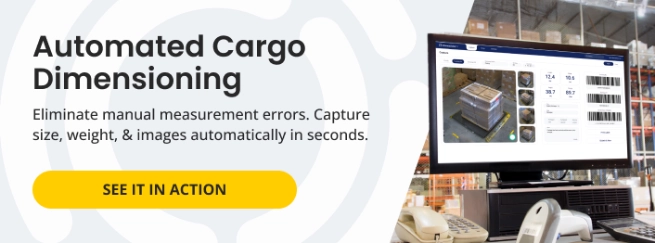
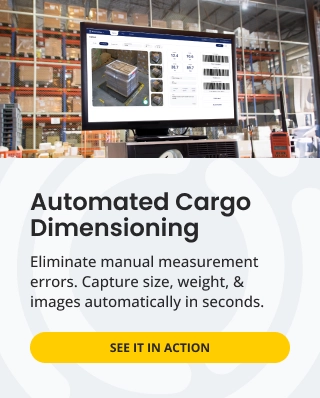
For example, dimensioning systems can capture cargo dimensions, weight, and images in seconds with a very low error rate. Mobile apps can help warehouse staff create packages from labels and automatically pull shipper, consignee, and carrier details into the record. Workflow systems can update shipment or cargo statuses, trigger customer notifications, and guide employees to the next step as cargo moves through the process.
Supply Chain Orchestrator supports these automations through its WMS, Workflows, WMS Mobile App, Dimensioner, and AI-powered communication tools.
The Dimensioner automates the capture of dimensions, weight, and images. Workflows help freight forwarders define processes, assign tasks, notify staff or customers, and update records automatically as cargo moves forward. The WMS Mobile App allows warehouse employees to create packages from labels, receive and complete tasks in real time, and print labels from the floor without walking back to a desk.
Supply Chain Orchestrator can also support customer service automation through VoIP, AI, and inventory data working together. This can automate answering common customer questions faster, reduce internal follow-ups, and provide more timely updates.
Automation should not be treated as a way to replace people. It should be used to remove low-value manual work and redeploy staff to areas where human judgment, customer service, and operational experience matter most.
When manual work is reduced, the operation becomes faster, more accurate, more profitable, and easier to control. Employees spend less time chasing updates and correcting mistakes, and more time moving work forward.
5. Customer-Specific Processes Are Hard to Enforce
As freight forwarders grow, customer-specific requirements become harder to track and manage.
One customer may require photos before cargo is put away. Another may want a notification after receiving. A different customer may need special handling, packaging, or document review process. These details may seem small, but they affect service quality when they are missed.
This is easier to manage when the operation is small and a few experienced people know each customer’s rules. But as volume grows, new customers are added, or staff changes, those requirements become harder to control.
Training helps, but it is not enough on its own. People forget. Busy days create shortcuts. Instructions can get buried in emails, notes, spreadsheets, or someone’s memory.
That is when the operation becomes inconsistent. One employee may follow the right steps, while another may miss them.
Enforcing Processes with Workflows
A better approach is to build customer-specific requirements into the process itself.
Instead of relying only on memory, freight forwarders can use workflow automation systems to guide employees through each step of the process. The core process can stay standard, while certain steps change based on the customer, cargo type, service level, or handling requirement.
For example, if a customer requires photos of the cargo, the workflow should trigger that step or show it in the assigned task. If a customer needs document review, the task should be assigned before cargo is released. When a customer needs to be updated, the system should send the notification automatically at the right time.
Supply Chain Orchestrator’s Workflows module supports this by helping freight forwarders standardize processes and enforce customer-specific requirements through tasks. The WMS and WMS Mobile App help staff complete those steps from the warehouse floor in real time, while the Customer Portal and automated notifications support customer-facing updates.
The key is consistency. Freight forwarders should not have to rely only on memory, manual follow-ups, or repeated training to deliver the right process for each customer. When the system guides the work, the operation becomes easier to control as it grows.
6. Quoting Without Clear Profitability
Freight forwarders must respond quickly to quote requests, especially when customers are comparing options.
But speed can create problems when rates are not tied to the real cost of serving the customer. A quote may win the deal but leave little margin, or no margin at all. The work may require more handling, storage, customer updates, or transportation support than expected.
Quoting is not only a sales issue. It is also an operations issue.
Sales may not always see the full effort required to serve the account. Operations handles the work, but profitability is often reviewed only after the job is complete. Without customer history and real operating cost visibility, the business may keep winning work that is not profitable.
Profitability should be considered during quoting and reviewed as the work moves through the operation. A rate is not just a number. It should reflect the cost, effort, and risk behind the service.
Connecting Quotes with Operational Reality
A better approach is to use a more organized rate management and quoting process.
The business should be able to see what was quoted before, which rate was used, which services were included, and what margin was achieved. Even better, profitability should be tracked at the service level, so the team can see which parts of the job are helping or hurting the margin.
It should also be clear which customers are more price-sensitive and how much each service costs to deliver.
One customer may accept a higher margin for urgent or specialized service. Another may reject that same margin based on past quote behavior. Some services may also require more labor, storage, handling, or transportation support.
Supply Chain Orchestrator’s rating system can support this by connecting quote history, approval and denial patterns, margin levels, and operating costs. When sales, operations, and finance data work together, freight forwarders can quote with more context instead of relying only on static rates or past assumptions.
The point is not only to quote faster. The point is to quote with a clearer view of cost, customer behavior, operational effort, and margin risk. That way, the business can win the right work, not just more work.
The Bigger Problem: These Challenges Are Connected
These challenges do not happen in separate lanes. One gap often creates another.
When tasks are not tracked, labor planning suffers. Without accurate cargo measurements, space decisions become weaker. If processes depend on memory, customer-specific steps get missed. Manual updates can quickly overload customer service. And when quoting is disconnected from operations, margins become harder to protect.
That is why freight forwarders improve faster when the warehouse, operations, customer service, and sales stop working as separate worlds. These areas all affect the same outcome: service quality, control, and profitability.
A connected system helps bring that work together. Instead of keeping warehouse activity in one place, customer updates in another, and quoting details somewhere else, freight forwarders can manage key parts of the operation in one environment.
Supply Chain Orchestrator supports this through modules such as WMS, Workflows, Dimensioner, WMS Mobile App, Customer Portal, and Rating System. Together, these tools help connect the work happening on the floor with the information needed by operations, customer service, and sales.
For example, the WMS helps track cargo and warehouse activity. Workflows guide tasks, enforce customer-specific requirements, and send automatic notifications when certain events occur. The Dimensioner captures cargo dimensions, weight, and images. The WMS Mobile App helps staff update work from the floor. The Customer Portal gives customers access to shipment and cargo updates in real time.
The goal is not to add more software for the sake of software. The goal is to reduce disconnected work. When the operation runs from shared information, freight forwarders can improve visibility, reduce repeated follow-ups, manage tasks more clearly, and make better decisions across the business.
Conclusion
The common challenges in freight forwarding operations often come down to control and visibility.
When work is not easy to track or measure, it becomes harder to manage labor, space, customer updates, and margin protection. That is why improving operations is not only about doing more. It is about making daily work clearer and easier to manage.
Supply Chain Orchestrator supports this by connecting WMS, Workflows, WMS Mobile App, Customer Portal, Dimensioner, and Rates in one platform. With the right systems working together, freight forwarders can reduce disconnected work and run their operations with better visibility and control.
FAQs
1. What are the most common challenges in freight forwarding operations?
The most common challenges in freight forwarding operations are productivity tracking, space management, limited visibility, manual work, inconsistent workflows, and rate management.
2. Why is productivity hard to measure in freight forwarding?
Productivity is hard to measure when work is not tracked by task. Without task-level tracking, freight forwarders may not know who completed each step, how long it took, or how many tasks (ex, put-away) were completed.
3. How does space management affect freight forwarding operations?
Space management affects storage, labor, and cargo movement. Without clear data on dimensions, volume, weight, and storage location, teams may underuse space or move cargo more than needed.
4. Why do freight forwarders need workflow automation?
Freight forwarders need workflow automation to standardize tasks, enforce customer-specific rules, processes, reduce missed steps, and limit manual follow-ups.
5. How does rate management affect freight forwarding profitability?
Rate management affects profitability because quotes should reflect service cost, handling effort, customer behavior, margin history, and operational complexity.

Written by
Hector Sunol
Related Blogs

Freight Forwarder Performance Metrics for Smarter Daily Operations
Freight forwarder performance metrics give a clearer view of workload, capacity, and daily operations. With the right metrics, freight forwarders can spot issues earlier, plan better, and make decisions with less gues...
Start Reading
Freight Forwarding Software: What to Look For
Freight forwarders live in the middle of moving parts. Rates change fast. Customers want updates now. And paperwork still has to be perfect. Yet many teams run the operation with emails, spreadsheets, and a few discon...
Start Reading
AI in Logistics: Practical Use Cases for 3PLs & Forwarders
AI in logistics is no longer a buzzword. It is already helping freight forwarders, 3PLs, and NVOCCs. Across the wider logistics industry, teams use it to forecast demand, speed up quoting, and spot problems before cus...
Start Reading