Artificial Intelligence AI in Logistics: Practical Use Cases for 3PLs & Forwarders
AI in logistics is no longer a buzzword. It is already helping freight forwarders, 3PLs, and NVOCCs. Across the wider logistics industry, teams use it to forecast demand, speed up quoting, and spot problems before customers feel the impact.
Table of Contents
SHARE ON SOCIAL MEDIA


Yet many small and mid-sized operators still see AI as something only big players can afford. Their reality is very different from the marketing slides. Teams jump between email, spreadsheets, WMS, TMS, and customer portals all day. Staff retype data from bills of lading, chase missing documents, and send status updates by hand.
Meanwhile, leading logistics providers are using AI to automate document processing and customs checks. They optimize warehouse slotting and pick routes, predict delays, and recommend better carriers or routes. Some control tower solutions even use AI agents to resolve most exceptions before a person gets involved.
The good news is that you no longer need a large ERP project or a data science team. With the right orchestration platform, you can connect WMS, workflows, CRM, and your customer portal. Then AI can drive focused automations: cleaner data in, smarter decisions out, and fewer manual steps between.
In this article, we will break down how artificial intelligence is used today. We will focus on freight forwarders, 3PLs, and NVOCCs. You will see real use cases, common challenges, and the KPIs that matter. Finally, we will show how Supply Chain Orchestrator helps you start small with AI and scale over time.
What “AI in Logistics” Really Means Today
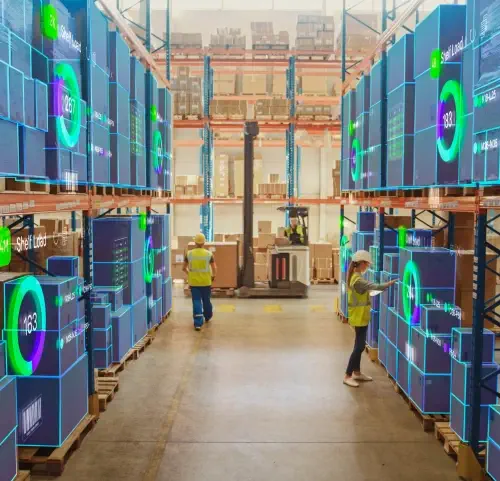
When people hear AI systems and machine learning in logistics, many think of science fiction or magic black boxes. In reality, most real projects fall into a few very practical buckets. They use data you already have and turn it into better decisions and fewer manual tasks.
First, AI helps you see what is coming. It looks at order history, seasonality, and current trends to forecast demand and capacity. That means you can plan labor, space, and transport earlier instead of reacting at the last minute.
Second, AI makes warehouses more efficient. It suggests better storage locations, groups orders in smarter ways, and builds faster pick paths. The result is less walking, fewer touches, and higher throughput with the same people.
Third, AI improves transport and visibility. It uses live and historical data to predict ETAs, spot delays, and suggest better routes or modes. Instead of tracking loads by hand, your team focuses on the few shipments that really need attention.
Fourth, AI takes over repetitive back-office work. It reads documents, extracts key fields, and checks for errors or missing data. Bills of lading, invoices, and customs forms move faster and with fewer mistakes.
Finally, AI supports orchestration across systems. It does not stop at a dashboard. It can trigger workflows, create tasks, send alerts, and update customers in real time. This is where artificial intelligence becomes powerful: it connects planning, execution, and customer experience in one continuous loop, instead of leaving your team to stitch everything together manually.
Why Artificial Intelligence Matters for 3PLs and Forwarders
Pressure keeps rising on operations
For most 3PLs, freight forwarders, NVOCCs, and small warehouses, the story is similar. Margins are tight, customers expect faster updates, and good people are hard to find. On top of that, data is scattered across systems that do not talk to each other.
This mix creates a lot of manual work. Teams copy data from emails into TMS or WMS screens. Staff chase missing documents and refresh carrier portals to check status. Someone answers the same “Where is my shipment?” question many times a day. Every extra step adds delay and risk.
How AI in logistics creates an edge
This is where artificial intelligence becomes a real advantage. Instead of adding more headcount, you get more value from the people and tools you already have. AI can predict where volumes will spike, so labor and space are planned earlier. It also cuts time spent on quoting, document handling, and exception management. As these use cases grow, overall operational performance improves in a visible way.
There is also a clear competitive angle. Large players already use AI to speed up decisions and provide real-time answers. Smaller 3PLs and forwarders that ignore these tools will start to look slow and hard to work with. Those that adopt AI early can deliver similar, or even better, service without a huge budget or a massive IT team.
With the right orchestration platform, artificial intelligence is not a big bang project. You start with one or two clear use cases, prove the value, and then expand. Over time, AI turns into a practical tool for daily operations instead of a risky side experiment.
Key AI in Logistics Use Cases Across the Lifecycle
Planning with AI in logistics: demand, capacity, and labor
AI in logistics often starts with better planning. Instead of simple spreadsheets, AI algorithms analyze order history, seasonality, and customer trends to forecast demand. That leads to more reliable views of future volumes.
For 3PLs and freight forwarders, this means clearer peaks by customer, lane, or product. Labor, dock space, and carrier capacity can be reserved earlier. Last-minute chaos during month-end or seasonal spikes becomes less frequent.
Planning gets even stronger when it feeds an orchestration platform. Forecasts can drive real tasks and workflows. In Supply Chain Orchestrator, for example, expected spikes can trigger staffing plans, pre-receiving tasks, or proactive calls to key customers.
Inside the warehouse: slotting, picking, and flow
Inside the warehouse, AI focuses on how people and goods move. It studies SKU velocity, order patterns, and typical travel paths. From that analysis, it recommends new storage locations and smarter pick paths.
Travel time and congestion drop as a result. Fast movers shift closer to packing or shipping. Slow movers move to less busy zones. Orders for the same route or customer can be grouped to avoid repeat passes through the same aisles.
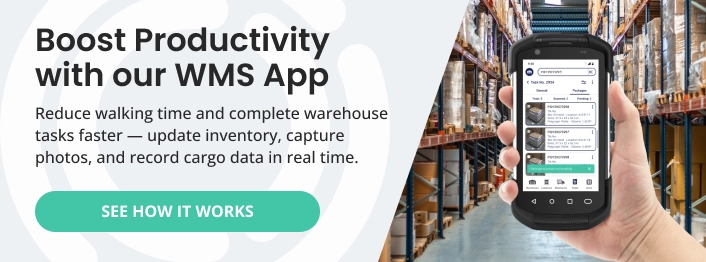
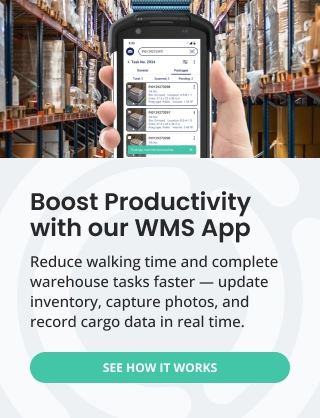
When these insights connect to your WMS and mobile app, they turn into concrete actions. Tasks to re-slot, re-label, or change pick paths can go straight to handheld devices through a platform like Supply Chain Orchestrator.
Transport and visibility: ETAs and exception management
Artificial intelligence also transforms transport and visibility. Live location data, traffic, port conditions, and history are combined to predict ETAs and likely delays. Operations teams see a focused list of shipments at risk instead of a long report of everything in transit.
Proactive service then becomes possible. Staff can rebook, reroute, or contact customers before a delay creates a complaint. Workflows can send alerts, create follow-up tasks, or open a case in your CRM.
With an orchestration layer in place, exception handling no longer depends on someone staring at screens all day. The system routes issues to the right team or person with full context attached.
Back office and documents: from paper to structured data
Some of the most painful work in logistics lives in the back office. AI helps here by reading bills of lading, invoices, packing lists, and customs documents. Key fields are extracted, checked, and standardized.
Freight forwarders, NVOCCs, and 3PLs then spend far less time typing and re-typing data. They also see fewer fines, disputes, and delays caused by simple errors in paperwork.
Document AI becomes even more powerful when it links to an orchestration platform. A validated invoice can kick off an approval workflow. A complete customs packet can move a shipment to the next status and update the customer portal. From first document to final delivery, the flow becomes faster and cleaner.
How Orchestration Platforms Make AI Actually Work
Connecting data instead of adding another silo
Many AI projects in logistics fail for the same reason. The models sit on top of disconnected systems and feed yet another dashboard. People already watch too many screens, so these insights never turn into action.
An orchestration platform tackles that problem at the root. It connects WMS, TMS, workflows, CRM, customer portals, and other tools into a single layer. Data from orders, inventory, shipments, and customers becomes part of one flow, not many separate islands.
Once that foundation exists, AI in logistics becomes much more practical. Predictions and risk scores do not stay locked in reports. They can drive queues, priorities, and tasks inside the tools your team already uses.
Turning AI insights into concrete actions
AI only creates value when it changes what happens next. Knowing that a lane will spike in volume is helpful. Automatically adjusting staffing plans, release times, or follow-ups is far more powerful.
In an orchestration setup, AI outputs act as triggers. A predicted volume peak can start a staffing workflow for the warehouse. A shipment flagged as “at risk” can open a case, notify the customer, and suggest an alternate route. A document with missing data can move into an approval flow instead of sitting unnoticed in someone’s inbox.
Because workflows sit at the center, teams see AI as part of normal operations. They respond to tasks and alerts, not raw model scores. The technology fades into the background, while better decisions show up in day-to-day work.
Making AI in logistics accessible for smaller teams
Large enterprises may have data science teams and complex IT stacks. Most 3PLs, freight forwarders, and NVOCCs do not. They need AI that feels like a natural extension of their current systems.
Orchestration platforms make that possible. New AI use cases can be added one by one, without rebuilding the entire tech stack. A company might start with document automation or exception alerts. Later, it can expand into forecasting, slotting, or pricing.
This step-by-step approach turns AI from a risky side project into a steady improvement path. Smaller teams get real gains in accuracy and speed, while avoiding the heavy overhead that often comes with large AI programs.
How AI Is Transforming Freight Forwarders, 3PLs, and NVOCCs
Freight forwarders: documents, pricing, and customer promises
For freight forwarders, AI often starts with paperwork. Tools can read bills of lading, invoices, packing lists, and customs documents. They extract key fields, check for missing data, and flag problems before they reach customs or the customer. As a result, teams spend less time typing and more time solving real exceptions, which directly supports better customer service.
Pricing is another big area. Instead of digging through spreadsheets and rate sheets, AI can compare contract and spot rates in seconds. It helps suggest the best option by lane, mode, and service level. That speeds up quoting and protects margins at the same time.
Service also improves. AI can scan shipments, emails, and tracking data to find loads at risk. Staff then receive a short, focused list instead of a huge queue. They can react earlier, rebook where needed, and keep customers informed with fewer surprises.
3PLs: warehouse optimization and network decisions
In 3PL operations, AI goes deep into the warehouse. It studies SKU velocity, order patterns, and picker routes. With that context, it recommends better slotting, smarter batching, and faster pick paths. Walking time drops, congestion eases, and throughput grows without a major change in headcount.
AI also supports labor and capacity planning. Forecasts show when specific customers, lanes, or product groups will spike. Managers can plan shifts, dock space, and carrier capacity before the rush hits. This reduces overtime and last-minute scrambling.
Beyond the building, AI helps with network decisions. Route optimization engines can suggest better carrier choices, consolidation options, and delivery windows. This helps choose the most efficient route and schedule for each shipment. They consider cost, service level, and constraints in one shot. That leads to lower transport costs and more reliable service for end customers.
NVOCCs: rates, capacity, and smarter bookings
For NVOCCs, AI focuses on rates and space. Systems can pull contract and spot rates across multiple carriers and services. They then calculate profitable offers by lane, trade, or customer. Sales teams answer faster and avoid underpricing complex moves.
Capacity planning also benefits. AI looks at booking trends, seasonality, and carrier schedules to forecast where demand will rise. With that insight, NVOCCs can secure containers and space earlier. This reduces the risk of rolled cargo and last-minute premium rates.
Bookings and customer interactions are changing as well. AI can guide digital booking flows, validate data, and trigger follow-up steps when information is missing. Simple status questions can be handled by chatbots or self-service tools. Human teams then focus on high-value exceptions and key accounts.
Common Challenges with AI in Logistics and How to Avoid Them
Weak or scattered data
AI is only as good as the data it learns from. Many logistics companies still rely on messy spreadsheets, disconnected systems, duplicate records, and incomplete shipment histories. Systems are not integrated, so each team sees just a small part of the truth.
To avoid this, start with data basics. Standardize item, customer, and location codes. Clean up old master data and remove obvious duplicates. Then connect core systems such as WMS, TMS, CRM, and your customer portal so events flow in a consistent way. Even simple integrations can make AI models far more useful.
Change management on the floor and in the office
Another common barrier is people. AI can suggest a new pick path, different carrier, or revised staffing plan. If supervisors and operators do not trust the recommendation, they will ignore it and keep using old habits.
You can reduce this friction by starting small and being transparent. Pick one or two clear use cases, like document extraction or simple exception alerts. Show the team how the logic works and share quick wins. Involve supervisors early and ask for feedback on how suggestions look in their daily work. Trust builds over time when people see that the system actually helps.
Overpromising what AI can do
AI in logistics is powerful, but it cannot fix a broken process or a bad service offering by itself. The recent rise of generative AI has added even more hype and unrealistic expectations. Some projects fail because teams expect full autonomy and get frustrated when the first release only automates part of the work.
A better approach is to frame AI as assistance, not magic. Define clear business goals for each phase, such as reducing manual data entry, speeding up quotes, or cutting late shipments. Measure the impact with simple KPIs and adjust. When leaders stay realistic, AI projects are easier to fund, explain, and extend. This mindset makes it easier to implement AI step by step instead of trying to do everything at once.
Final Thoughts: Making AI in Logistics Practical
AI in logistics is no longer an experiment for a few large players. Freight forwarders, 3PLs, and NVOCCs are already using it to clean up documents, speed up quotes, improve slotting, and spot risky shipments earlier. The value is real, but it only shows up when AI is tied to good data and clear workflows across broader supply chain management.
You do not need to start with a huge project. A better first step is to pick one or two focused use cases. Document automation, basic forecasting, or simple exception alerts are all strong options. Once those prove their value, you can move into deeper areas like warehouse optimization, routing, or pricing.
Orchestration platforms play a key role in this journey. They connect WMS, TMS, workflows, CRM, and customer portals, so AI insights flow into tasks, queues, and updates that teams actually use. Instead of adding one more dashboard, you improve the tools people touch every day.
If your goal is to modernize logistics operations without a massive budget, AI and orchestration together offer a realistic path. You can reduce manual work, react faster to problems, and deliver a smoother experience for customers and partners. Over time, these small improvements add up to a clear competitive edge.

Written by
Hector Sunol
Related Blogs

Supply Chain Orchestration: A Simple SMB Guide
Running a small or midsize operation today is tough. Orders spike, then stall. Inventory moves fast. Customers want answers right now.
Most teams try to keep up with spreadsheets, emails, and a few discon...
Start Reading
Supply Chain Orchestration: Role, Components, and Importance
Supply chain management is vital in determining a company’s success or failure in extremely competitive industries. Businesses can streamline operations and achieve maximum efficiency by effectively orchestratin...
Start Reading

How Supply Chain Software is Transforming Small Business Operations
In today’s competitive market, small businesses need every advantage to stay ahead, especially in logistics where efficiency is key. Historically, advanced tools like supply chain management software were only accessi...
Start Reading